
Individual
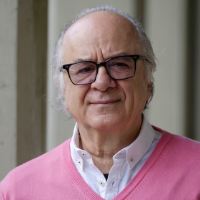
Boaventura de Sousa Santos
Descrição
Boaventura de Sousa Santos: A Life of Critical Thought and Transformative IdeasBoaventura de Sousa Santos, born in 1940 in Coimbra, Portugal, has become one of the most original and influential voices in contemporary sociology, legal theory, and critical thought. Over the decades, his trajectory has blended academic rigor with a deep ethical commitment to social justice, producing an intellectual path that connects universities, grassroots movements, and global debates on democracy, rights, and knowledge.
What makes his work particularly fascinating is not only the academic weight of his contributions, but the way in which his life reflects a consistent dialogue between North and South, theory and practice, science and activism. To follow his career chronologically is to trace the evolution of a thinker who never stopped questioning the structures of power, yet always sought to build bridges where others saw divides.
Early Years and Education in Coimbra
Boaventura was born into a Portugal still living under the Estado Novo regime, an authoritarian context that limited freedoms but also sharpened the sensibilities of those who, like him, would become future critics of power. Raised in Coimbra, a city marked by its ancient university, he grew up surrounded by the weight of tradition and the possibilities of intellectual discovery.
He studied law at the University of Coimbra, completing his degree in 1963. His legal training was not merely a technical exercise; from the beginning, he saw the law as a social and cultural construct, something that both reflected and shaped power relations. This dual perception would later become a foundation of his career as a sociologist of law.
Doctoral Studies in the United States
In the late 1960s, Boaventura traveled to the United States to pursue his doctoral studies. He obtained his PhD in sociology of law at Yale University in 1973. This period was crucial, exposing him to an intellectual environment vastly different from Portugal, then still under dictatorship.
Yale in the early 1970s was a place of debate and experimentation, where critical legal studies, civil rights struggles, and the Vietnam War protests shaped the academic climate. Immersed in this environment, Boaventura refined his sociological perspective and deepened his interest in the intersections between law, politics, and social transformation.
Return to Portugal and the Revolution of 1974
In 1974, Portugal experienced the Carnation Revolution, which ended decades of authoritarian rule. Boaventura returned home during a time of profound transformation. He joined the University of Coimbra as a professor, bringing with him not only the tools of American sociology but also a renewed sense of responsibility to contribute to the democratic project emerging in his country.
He quickly became known as a pioneering scholar in sociology of law, analyzing the ways legal systems functioned not just as neutral instruments, but as contested fields where power and resistance coexisted. His early research in Portugal examined the paradoxes of democracy and the challenges of building institutions in post-authoritarian societies.
Founding the Centre for Social Studies (CES)
In 1978, Boaventura founded the Centre for Social Studies (CES) at the University of Coimbra, which would become one of the most important research institutions in Southern Europe. CES brought together scholars from different disciplines to study issues of democracy, law, culture, globalization, and social movements.
Under his leadership, CES grew into a hub of critical thought, producing influential research not only for Portugal but for Europe and Latin America. It became a space where academia engaged with social reality, maintaining a consistent dialogue with grassroots organizations, NGOs, and political actors.
The 1980s: Alternative Legal Thinking
During the 1980s, Boaventura focused on what he called the “new legal common sense”. He argued that law should not be seen as a rigid system imposed from above but as a field of possibilities where citizens could exercise creativity and resistance. This was the period when his reputation as a critical legal scholar expanded internationally.
His comparative studies, including research in Latin America and Africa, revealed how formal legal systems often coexisted with informal or community-based practices of justice. This insight helped him articulate the idea of plural legalities, a cornerstone of his thought that challenged the monopoly of state-centered law.
The 1990s: Globalization and Counter-Hegemony
The 1990s brought globalization as a dominant theme in both politics and academia. Boaventura responded with a critical stance. For him, globalization was not a single process but a set of competing globalizations. He distinguished between “hegemonic globalizations,” driven by capital and powerful states, and “counter-hegemonic globalizations,” embodied in the practices of social movements, indigenous peoples, and alternative networks of knowledge and solidarity.
This period also marked his closer connection to Latin America, where he collaborated with social movements, particularly in Brazil. He studied how marginalized communities used law strategically to claim rights, a perspective he called “the sociology of absences and emergences”: understanding not only what exists but what has been silenced, and imagining what could still emerge.
The 2000s: Epistemologies of the South
In the 21st century, Boaventura crystallized his most influential contribution: the Epistemologies of the South. This was not simply an academic theory but a profound rethinking of the very foundations of knowledge.
He argued that modern science, while powerful, had imposed itself as the only valid form of knowledge, marginalizing other traditions such as indigenous wisdom, popular culture, or local know-how. This process, which he called “epistemicide”, destroyed valuable perspectives and reinforced inequalities between North and South.
His proposal was to decolonize knowledge, to create an “ecology of knowledges” where scientific rationality could coexist with other ways of understanding the world. This idea resonated deeply in countries of the Global South, particularly in Latin America and Africa, where indigenous movements and social struggles sought recognition not only of rights but of their worldviews.
Contributions to Constitutional Processes
Boaventura’s influence went beyond books and conferences. In the 2000s, he participated as an advisor in constitutional processes in countries like Ecuador (2008) and Bolivia (2009), where new constitutions recognized the plurinational character of the state and incorporated indigenous rights and cosmologies.
His expertise in legal pluralism and intercultural dialogue made him a key interlocutor in debates about how to design institutions that reflected not only Western legal traditions but also local and ancestral practices.
Academic Recognition and International Influence
Throughout the 2000s and 2010s, Boaventura became a global reference. He received honorary doctorates from universities across Europe and Latin America, published widely translated books, and was frequently invited to speak at international forums.
His writings such as “Toward a New Legal Common Sense” and “Epistemologies of the South: Justice Against Epistemicide” became classics in sociology, law, and political science courses worldwide.
At the same time, he maintained his directorship of CES, ensuring it remained a vibrant laboratory of ideas and a bridge between academic research and social activism.
Recent Years and Ongoing Relevance
In recent years, even after his retirement as full professor, Boaventura has continued to publish and intervene in global debates. He has written about climate justice, the crisis of neoliberalism, and the need to rethink democracy in times of rising authoritarianism.
His voice remains particularly relevant in discussions about the global South’s role in shaping alternatives to the dominant model of development. In a world marked by inequalities, environmental challenges, and cultural tensions, his call for a dialogue of knowledges offers hope for more inclusive and sustainable futures.
Intellectual Style and Originality
What sets Boaventura apart is his intellectual style: he combines the precision of a jurist with the imagination of a poet, the discipline of a sociologist with the passion of an activist. His texts often weave together analytical rigor and metaphors that make complex issues accessible without losing depth.
For example, when he speaks of “epistemicide,” the term strikes the reader not only as a concept but as a powerful image of cultural destruction. Similarly, his idea of an “ecology of knowledges” is at once scientific and poetic, evoking the richness of biodiversity applied to human thought.
A Chronological Legacy with a Human Dimension
To narrate his trajectory chronologically is to see the gradual unfolding of a coherent project. From Coimbra to Yale, from Portugal’s democratic transition to the global South, from sociology of law to epistemologies of the South, his career is a thread that connects personal biography with planetary challenges.
Yet beyond the milestones, what remains is the human dimension: a thinker who never separated knowledge from responsibility, who always insisted that universities must listen to society, and who saw in the struggles of the marginalized not only suffering but also creativity and wisdom.
Conclusion: The Timeless Relevance of Boaventura de Sousa Santos
At over eight decades of life, Boaventura de Sousa Santos continues to inspire. His work shows that sociology and law are not ivory-tower disciplines but living tools to understand and transform reality. His insistence on valuing different forms of knowledge is not nostalgia for the past but a forward-looking strategy to survive and thrive in the 21st century.
In a time when global crises—from climate change to social inequality—demand fresh perspectives, his message is clear: there is no single path to truth, but many voices, many knowledges, and many democracies waiting to be recognized.
By weaving his own trajectory with the aspirations of countless communities around the world, Boaventura de Sousa Santos has given us more than theories; he has gifted us with an intellectual and ethical compass. His legacy will remain as a call to think critically, act responsibly, and imagine collectively a more just and diverse future.
